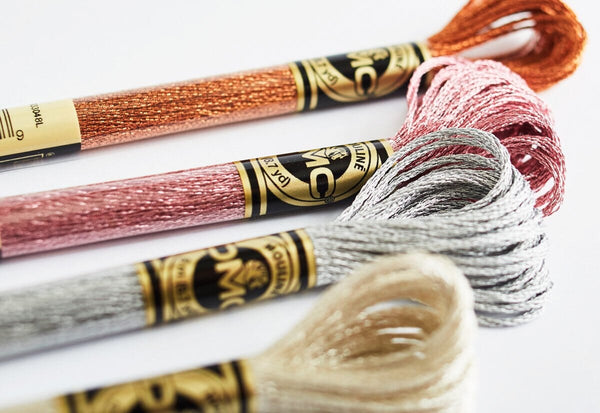
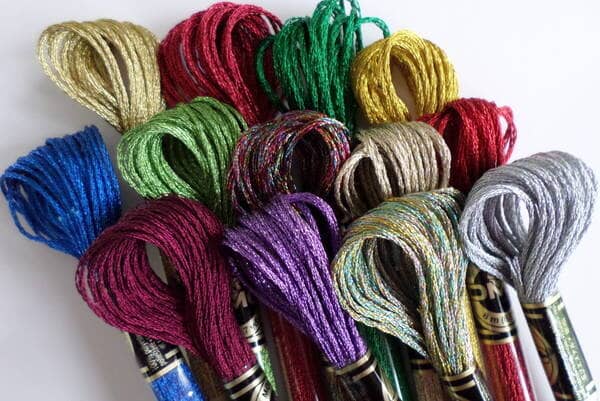
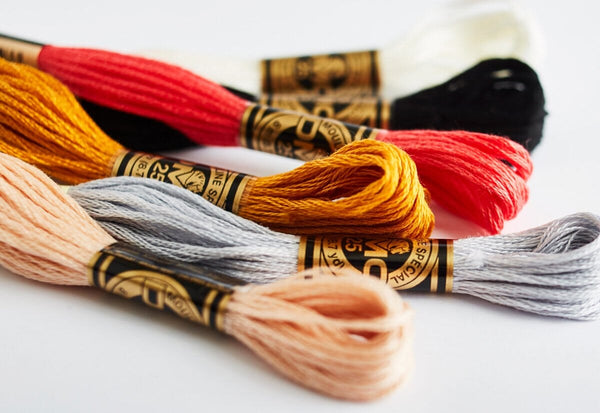
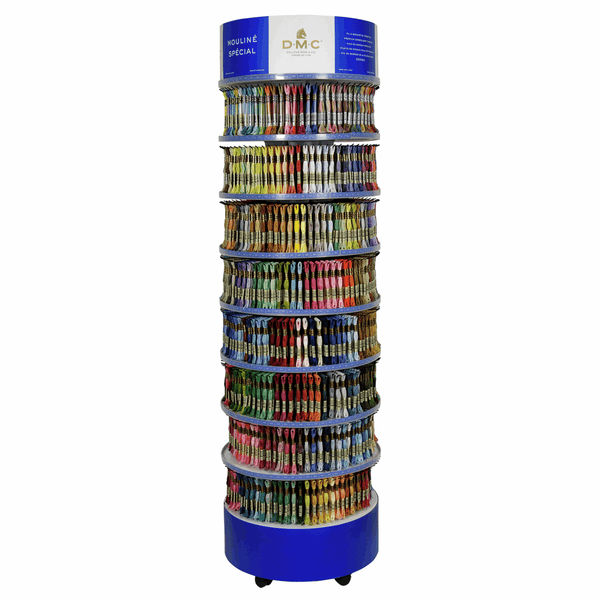
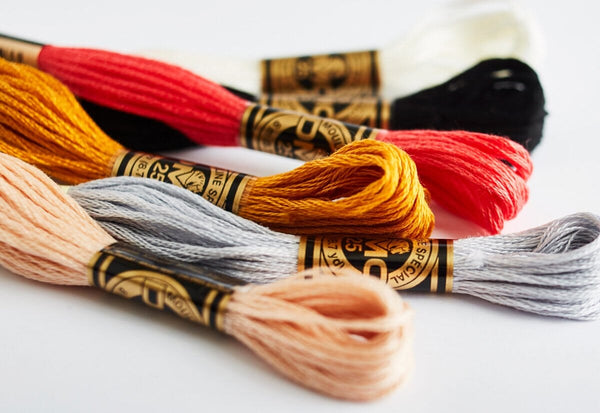
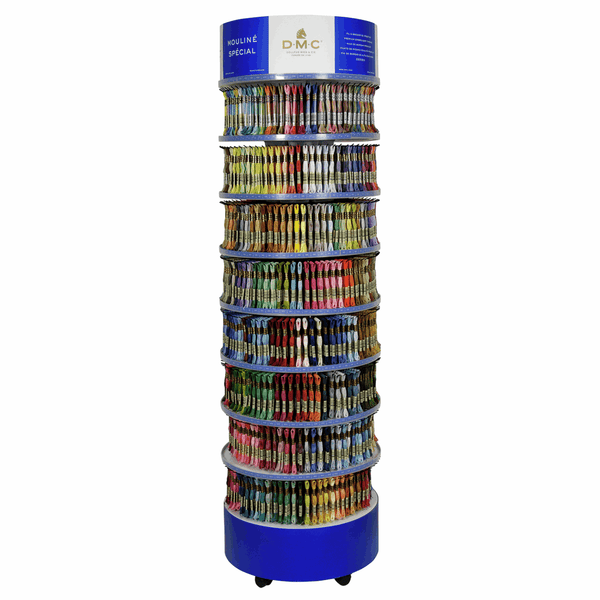
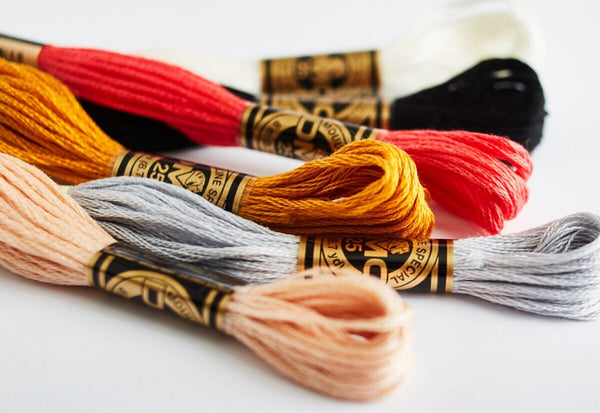
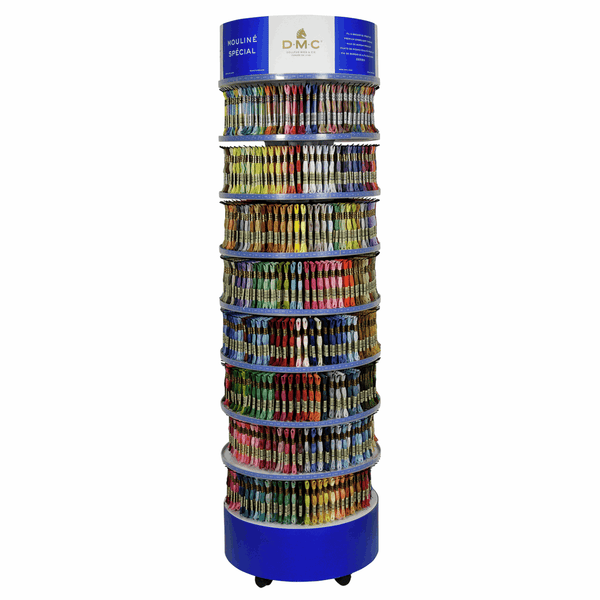
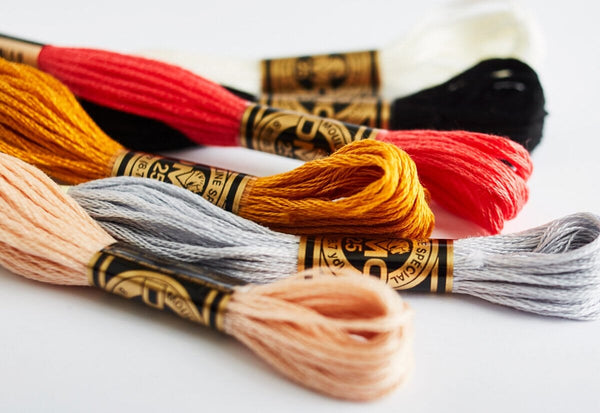
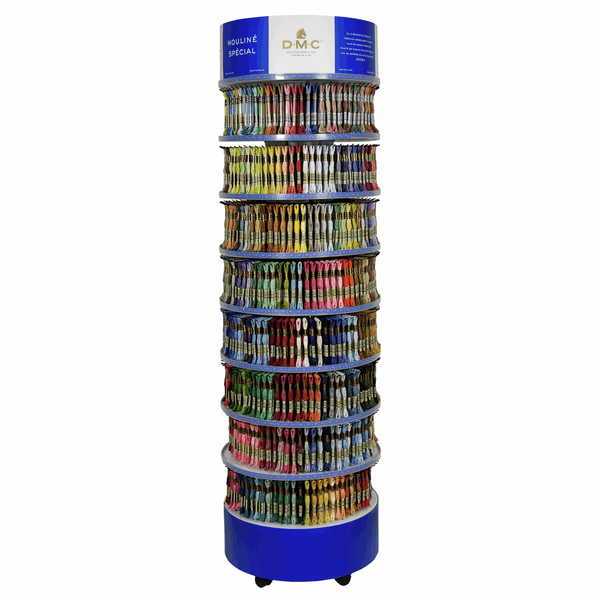
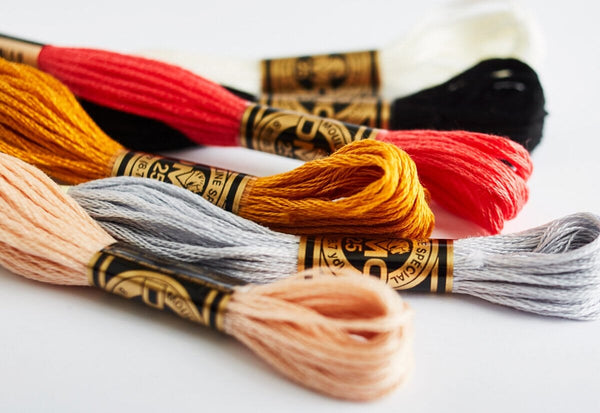
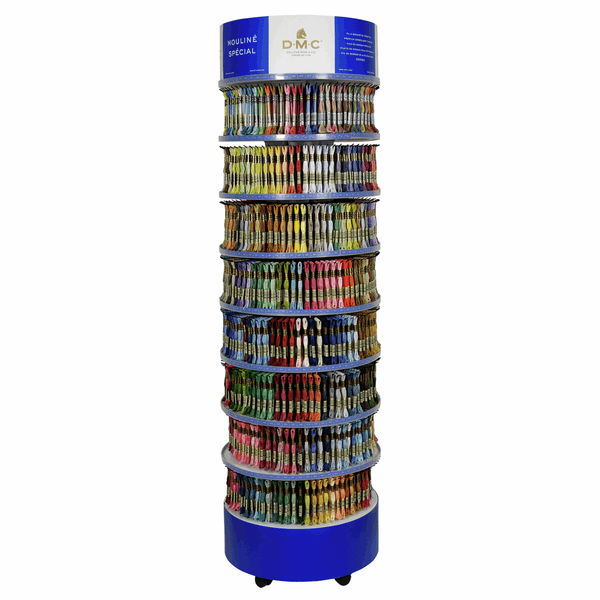
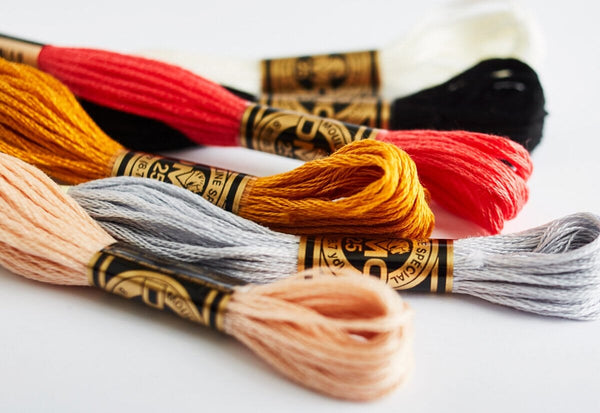
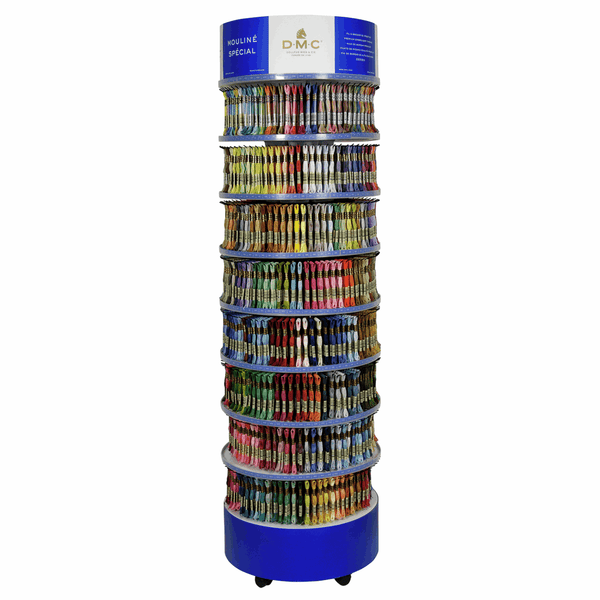
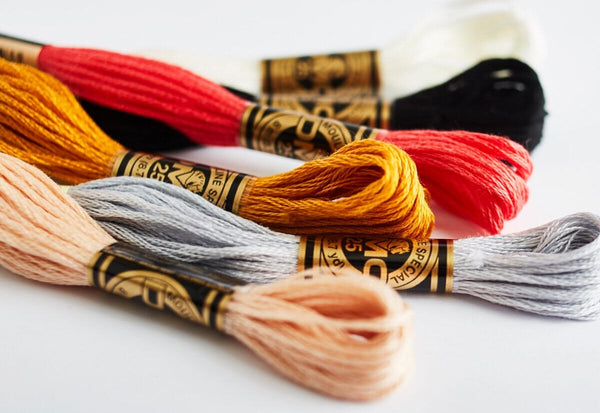
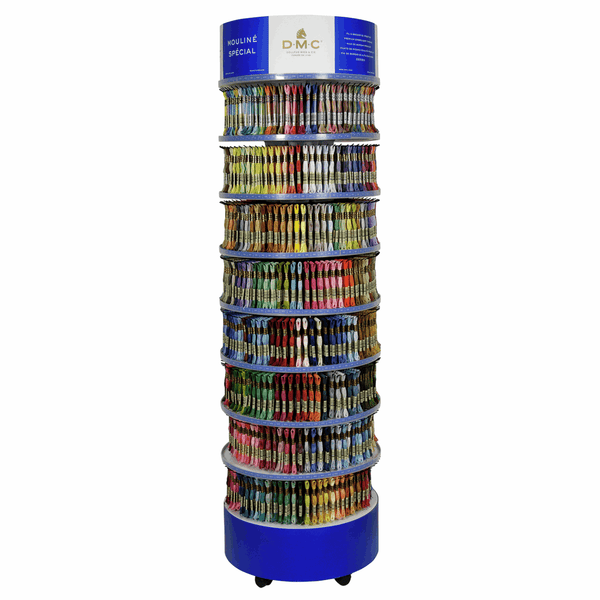
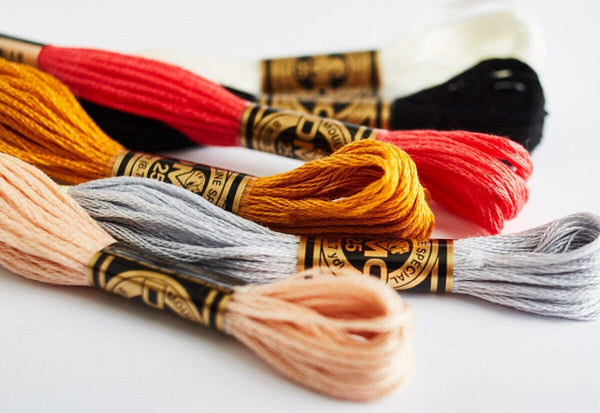
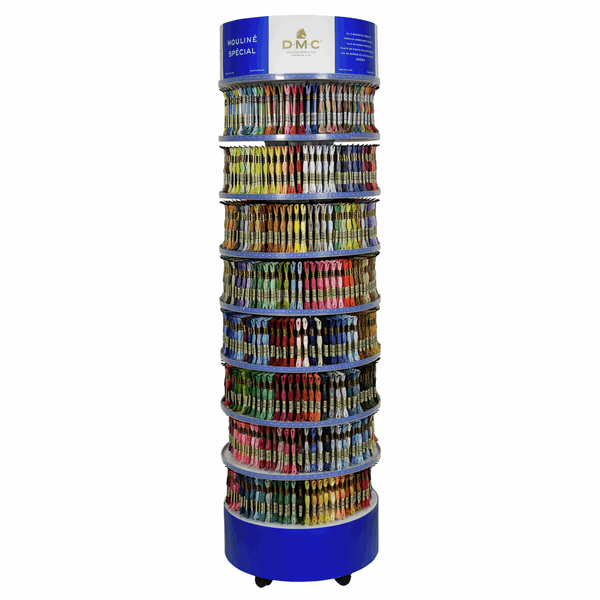
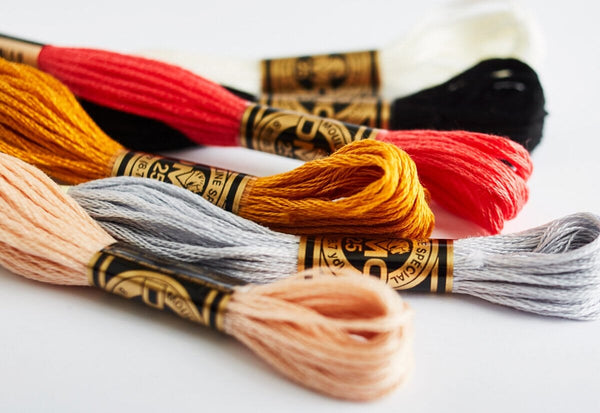
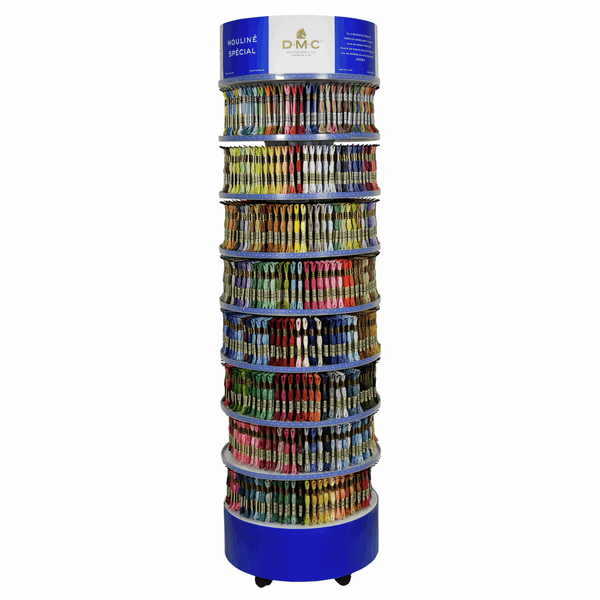
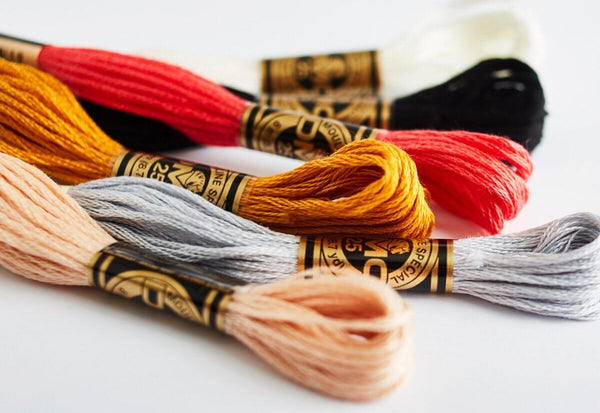
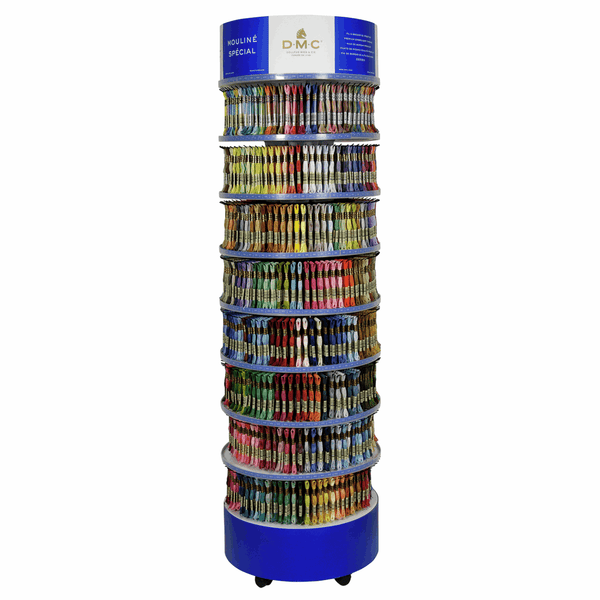
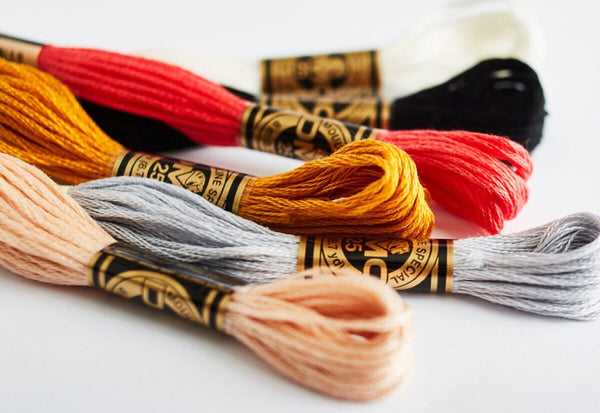




DMC Satin Stranded Embroidery Thread
From $ 2.50


FAQ - Embroidery Threads
What thread is best for embroidery?
Polyester embroidery threads are more durable and retain colour and luminosity after many washes, so if you are embroidering an item that gets a lot of wear and tear, polyester may be best. For projects like cross-stitch and ornamental items, stranded cotton comes in just about every colour you can think of so you can fulfil your wildest tapestry dreams!
What is the difference between embroidery floss and embroidery thread?
Embroidery floss is sometimes used interchangeably with embroidery thread, but the word “floss” means the collection of the 6 threads that are typical when purchasing embroidery thread. It’s like the difference between saying “yarn” and “a ball of yarn”. This is a bit different again for machine embroidery, where it is most often called floss instead of thread.
Is embroidery thread 2 ply?
Most embroidery thread is 2 ply, as this allows for a high sheen. Some come in a 3 ply, but will have less of a sheen as a result.
What do the numbers mean on embroidery thread?
The numbers refer to the weight of the thread: the higher the weight number, the thinner the thread.
What is a good thread count for embroidery?
The thread count that’s best can vary depending on your specific project. The count refers to the amount of thread in an inch (for example, 36 count means 36 threads in the inch). The higher the number, the finer the fabric and the smaller the design. So if you’re looking to do a small, dainty design, a higher number is better, but for simpler designs, a lower number works!
Are there different types of embroidery thread?
Plenty! There are natural and synthetic options available, from many different brands.
Cotton is the most popular and versatile. Silk is great for highly detailed work and has the smoothest finish. Metallic threads offer wonderful highlights and oomph to your piece.